Shamrock Leopard Design
A Designer’s First Look: Playful, Punchy, and Purpose-Built
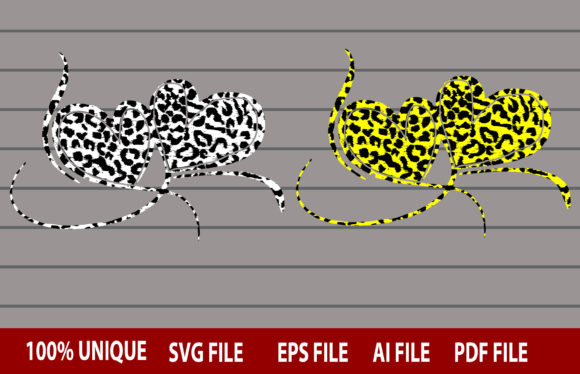
When I opened the Shamrock Leopard Design, my first thought wasn’t “cute” or “trendy”—it was “this has *intent*.” The fusion of Celtic symbolism and wildcat energy feels deliberate, not gimmicky. It’s bold without being chaotic: clean negative space around the shamrock’s curves, confident leopard spots placed with rhythm—not randomness—and a silhouette that reads instantly at 3 inches *and* holds up at 8. As an embroidery designer who’s stitched hundreds of holiday, baby, and boutique pieces, I immediately saw where this lives: on a linen apron for a St. Patrick’s Day pop-up, as a subtle chest emblem on a unisex sweatshirt, or centered on a cotton tote bag for a local café’s seasonal launch.
Real-World Stitching: Where It Shines (and Where to Pause)
I tested the Shamrock Leopard Design on three real project types: a medium-weight cotton tote bag, a French terry sweatshirt, and a 100% cotton tea towel. On the tote? Crisp satin stitch along the shamrock’s edges, balanced fill stitch in the leaf sections—no puckering, no thread nesting. The leopard spots stayed distinct, not muddy, thanks to smart spacing and moderate stitch density. On the sweatshirt? Slightly more caution needed: I doubled up tear-away stabilizer and reduced top tension by half. The design held its shape, but the spots near the curved shoulder seam softened just enough—nothing a skilled digitizer couldn’t refine, but worth noting if you’re stitching caps or curved surfaces.
The tea towel was the true test. Lightweight cotton + high absorbency = potential for shadowing and distortion. Here, the Shamrock Leopard Design surprised me: its open layout and lack of dense interior fills meant minimal stabilizer bleed-through, and the design retained visual weight even after two machine washes. That’s rare for a graphic this spirited—it doesn’t rely on heaviness to read well.
Fabric & Fit: Know When to Lean In—and When to Step Back
- Thin or stretchy fabrics? Use cutaway stabilizer and reduce stitch speed. The shamrock’s outer curve is elegant but can distort on jersey or rib knit without support.
- Dark fabric? Test thread contrast early. Light green or gold thread pops beautifully against navy or charcoal—but avoid pale mint on black; it disappears. A quick black-and-white mockup saves time.
- Small hoop sizes (under 4×4)? The full design fits comfortably in a 5×7, but trimming it down risks losing spot definition. If you must scale, prioritize keeping the central shamrock intact and simplify spots to single running-stitch accents.
- Baby items or nursery decor? Absolutely viable—just skip metallic threads and verify all stabilizer is fully removed. The playful theme lands warmly without feeling juvenile.
- Holiday or wedding gifts? Yes—but lean into presentation. This isn’t a “subtle monogram” design. It’s joyful, confident, and best paired with clean, natural materials: oatmeal linen pillow covers, undyed canvas patches, or ceramic mugs with minimalist branding nearby.
What This Design Says About Your Craft Business
Using the Shamrock Leopard Design isn’t just about adding a graphic—it’s about signaling your brand’s balance of tradition and personality. Etsy sellers told me their customers specifically asked, “Is that *your* original design?” when they featured it on embroidered kitchen towels. That’s trust built through clarity and cohesion. The design doesn’t shout; it invites recognition. Its dual-theme nature also lets you pivot: market it as “Irish heritage meets modern edge” for St. Paddy’s, then reposition it as “playful botanical” for spring collections.
For small shop owners and craft fair vendors, this is a quiet workhorse. It scales across product categories without needing redesign—same file works for a magnet, a patch, and a mug wrap—because vector roots mean crisp output at any size. But remember: as a digital embroidery file, its value multiplies only when you pair it with thoughtful execution. A poorly stabilized tote bag undermines the design’s polish; a perfectly stitched one makes your shop feel like a curated studio.
Practical Notes Every Embroiderer Should Run Through
- Always stitch a test on scrap fabric matching your final material—especially for texture and stretch.
- Check thread color contrast on both light and dark backgrounds before committing to bulk production.
- Review stitch density visually—not just numerically. Dense fills trap moisture; open areas breathe. The Shamrock Leopard Design leans open, which is smart for apparel.
- Confirm your hoop size fits the full design comfortably. Don’t force it into too tight a frame—the outer leaves need breathing room.
- Inspect corners and inner curves closely. Are spots cleanly separated? Does the shamrock’s stem taper smoothly? These details define professionalism.
- Test a black-and-white printable mockup first. If it reads clearly without color, your embroidery will too.
- Verify licensing terms before selling finished items or bundling the file as part of a digital product. The listing says “for your business product needs,” but commercial use rights vary—check before scaling.
Final Thought: Not Just Another Graphic—A Design Decision
The Shamrock Leopard Design isn’t background noise. It’s a statement piece with quiet versatility—ideal for craft businesses that want charm without cliché, personalization without fuss, and embroidery that feels intentional, not incidental. It won’t solve every design challenge (no single machine embroidery design should), but it elevates projects where authenticity matters: handmade products, personalized gifts, custom apparel with soul. Whether you’re stitching for a client, prepping for a craft fair, or building your Etsy shop’s signature look, this design earns its place—not because it’s trendy, but because it’s *thoughtful*. And in the world of Crafts and Graphics, that’s the detail that separates memorable from forgettable.