Funny Sloth with Coffee Character
First Impression: Charming, Relatable, and Embroidery-Ready
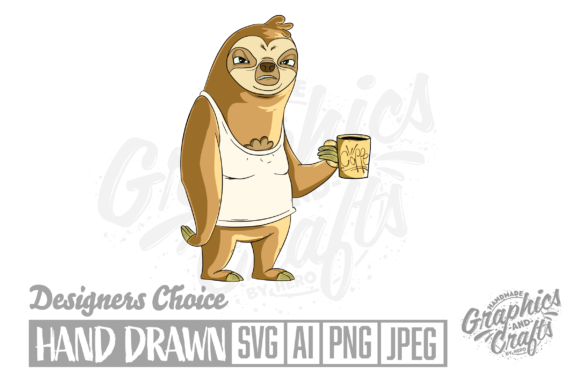
When I opened Funny Sloth with Coffee Character, I didn’t just see a vector graphic—I saw a mood. A warm, gently humorous moment: slow-paced joy, caffeine-fueled calm, and quiet resilience. The sloth’s relaxed posture, oversized mug, and soft facial expression land perfectly for handmade products that balance whimsy with authenticity. It’s not overly detailed or fussy—no tiny eyelashes or complex shading—so it avoids common pitfalls in machine embroidery design: thread breaks, dense fill stitch buildup, or loss of clarity at small scales. That simplicity is intentional, and it’s smart.
A Real Project Test: Custom Embroidered Tote Bags for a Local Café
Last week, I prepped Funny Sloth with Coffee Character for a batch of linen-cotton tote bags—part of a small-batch collaboration with a neighborhood café. These weren’t just promotional items; they were curated gifts for regulars who loved the “slow coffee” ethos. I digitized the design (or used a trusted digitizer) with moderate stitch density, prioritizing clean satin stitch edges on the mug handle and smooth fill stitch for the sloth’s body. On medium-weight natural fabric, the result was tactile, legible, and quietly expressive—exactly what handmade product buyers respond to. Customers didn’t just smile—they paused, pointed, and asked where to buy more. That kind of organic engagement is rare without genuine visual resonance.
Where This Design Shines—and Where It Needs Thoughtful Handling
Funny Sloth with Coffee Character fits naturally into relaxed, lifestyle-driven categories: sweatshirt embroidery for remote workers, baby embroidery on organic cotton onesies (paired with soft pastel thread), embroidered patch applications for denim jackets, or pillow covers for cozy home studios. Its rounded shapes and open negative space translate well across fabric types—especially stable weaves like twill, canvas, or medium-knit cotton.
But real-world use demands realism. On stretchy fabrics like jersey tees, I recommend testing stabilizer layers first—light cutaway works best for maintaining shape without stiffness. For curved surfaces like caps, simplify or slightly enlarge key features (like the mug’s rim) so they read clearly when stitched on a dome. Avoid using it at under 3 inches wide on textured fabrics (e.g., terry cloth towels or bouclé blankets); fine details blur, and the charm flattens. And while the design reads beautifully on light fabric, test contrast carefully on dark backgrounds—some versions of the graphic may rely on subtle gradients that vanish without proper thread color selection or underlay stitching.
What It Adds to Your Finished Product—Beyond Cuteness
This isn’t just another clipart-style graphic. Used thoughtfully, Funny Sloth with Coffee Character elevates perceived value. On an Etsy listing for personalized gifts, it signals warmth and intention—not mass production. For a craft fair booth, it becomes a conversation starter about pacing, self-care, and joyful imperfection. In boutique branding, it reinforces a cohesive, human-centered aesthetic. Buyers notice craftsmanship in how cleanly the mug handle stitches out, how evenly the sloth’s fur texture (if implied through stitch direction) reads, and whether the overall scale feels intentional—not cramped or oversized.
It also supports brand consistency. Whether you’re selling digital embroidery files or finished embroidered patches, this design carries tone without needing explanation. No forced slogans, no overdesigned elements—just clear visual storytelling. That builds customer trust faster than any tagline.
Practical Designer Notes Before You Stitch
- Always test on scrap fabric first—especially if pairing with new stabilizers or thread brands.
- Check thread color contrast on both light and dark mockups before finalizing your palette.
- Review stitch density: avoid overloading small areas like the sloth’s ears or mug steam swirls—running stitch accents often read better than dense fills there.
- Confirm hoop size compatibility—if your project uses smaller hoops (e.g., 4x4"), verify the design fits comfortably with margin for hooping stability.
- Inspect small details at actual stitch-out size: does the coffee steam hold up? Is the sloth’s smile legible after shrinkage?
- Test black-and-white mockups to assess silhouette strength—this design relies on shape as much as detail.
- Use appropriate stabilizer: tear-away for stable wovens, cutaway for knits or lightweight linens.
- Verify licensing before selling finished products or bundling as part of a commercial embroidery file pack—this is a Graphics asset from Hero’s Graphics and Crafts Corner, intended for craft projects, but commercial reuse terms should be confirmed directly.
Final Thought: A Design That Works With You, Not Against You
Funny Sloth with Coffee Character doesn’t shout. It leans in. That makes it unusually versatile for serious craft business use—whether you’re an Etsy seller building seasonal collections, a small shop owner curating nursery decor, or a custom apparel decorator developing signature motifs. It supports personalization without demanding perfection. It invites connection without leaning on cliché. And in a market flooded with overdesigned, oversaturated graphics, its gentle confidence stands out—not because it’s flashy, but because it’s thoughtful.
For embroidery designers and creative entrepreneurs alike, that’s the mark of a truly useful design asset: one that enhances your process, honors your materials, and resonates long after the hoop comes off.