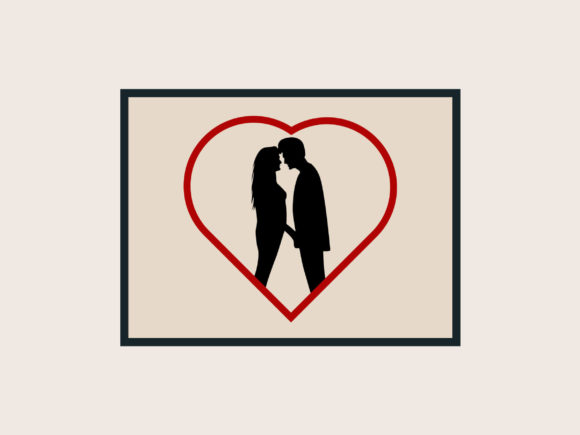
Couple Line Print, Lovers Line Art, Love
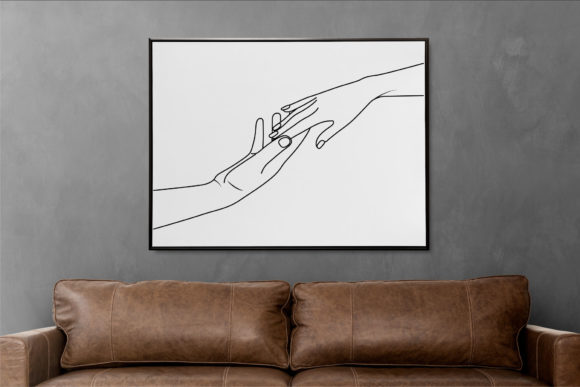
As a designer who’s digitized and stitched over 400 embroidery projects—from boutique baby onesies to Etsy best-selling tote bags—I opened Couple Line Print, Lovers Line Art, Love expecting simplicity. What I found wasn’t just minimalism—it was quiet intention. Clean lines, balanced negative space, and that bold heart anchoring the composition make it feel both tender and confident. It’s not overly sweet or cliché; it reads as modern romance, not greeting-card filler. That matters—especially when you’re stitching for real people, not stock photo backdrops.
First Stitch, First Impression: Does It Translate to Thread?
I tested Couple Line Print, Lovers Line Art, Love on a medium-weight cotton twill tote bag—exactly the kind I sell at local craft fairs. Right away, the line weight held up: no vanishing strokes, no fragile joins between figures and heart. The design’s open structure means it breathes on fabric—no dense fill stitch traps, no risk of puckering on lightweight materials. That’s huge for sweatshirt embroidery or baby embroidery, where softness and drape are non-negotiable. It’s not an applique design, so there’s no fabric layering to manage—just clean running and satin stitch paths (assuming your digitizer preserves the line integrity). For custom apparel, that translates to faster hooping, fewer thread breaks, and smoother transitions across seams and curves.
Where This Design Truly Shines
- Tote bags & tea towels: Its scale and clarity pop at 3.5–4.5 inches wide—ideal for center-chest placement without overwhelming the item.
- Baby items & nursery decor: No tiny facial details or fine linework to vanish in short stitches—just gentle, legible shapes that hold up beautifully on gauzy muslin or organic cotton.
- Embroidered patches: The heart acts as a natural focal point, and the surrounding negative space makes cutting and backing straightforward.
- Holiday or wedding gifts: It reads instantly as “love,” but with enough subtlety to avoid feeling seasonal or dated—perfect for anniversary handkerchiefs or couple-themed kitchen towels.
- Etsy listings & small shop products: As a digital embroidery file, it pairs effortlessly with printable mockups—black-and-white or color versions both communicate warmth and craftsmanship.
Where to Pause—and Test First
This isn’t a one-size-fits-all machine embroidery design. Its elegance depends on execution. On stretchy fabric like jersey tees? Use cutaway stabilizer—not tear-away—and reduce top tension slightly to keep lines crisp. On dark fabric? Test thread colors early: a soft heather gray or deep burgundy often reads richer than black for the outlines. On curved surfaces like caps? Avoid placing the full composition across the front panel—scale down to 3 inches max, or isolate just the heart as a standalone motif.
Also watch the heart’s lower curve. Some digitizers may oversimplify that area into a single long satin stitch—fine on stable fabric, but risky on textured weaves or loosely woven linen. Always inspect that detail on your embroidery software before sending to the machine. And if you're planning layered garments (think: embroidered sweatshirt under a denim jacket), confirm the stitch density stays low—this design shouldn’t exceed medium density unless you’re intentionally going for a bolder, more sculptural effect.
What It Adds to Your Finished Product—Beyond Aesthetics
Couple Line Print, Lovers Line Art, Love quietly elevates perceived value. Customers don’t just see “a couple”—they sense care in the spacing, balance in the proportions, and intention behind the abstraction. That builds trust, especially for personalized gifts. When someone orders a custom embroidered pillow cover with this design, they’re not buying decoration—they’re investing in emotional resonance. For craft business owners, that translates directly to repeat buyers and word-of-mouth referrals.
It also supports brand consistency. Whether you use it across apparel, home goods, or digital design assets, its clean graphic language holds together without needing heavy reworking. And because it’s delivered in AI, EPS, PNG, SVG, JPG, and PDF formats, you can adapt it seamlessly—vector files for precise resizing, PNGs for quick social mockups, PDFs for client approvals.
Practical Designer Notes Before You Stitch
- Always test Couple Line Print, Lovers Line Art, Love on scrap fabric matching your final project’s weight and texture.
- Check contrast: run a black thread version on light fabric and white thread on dark fabric—see which feels truer to the mood you want.
- Review stitch order in your embroidery software—if the heart stitches first, it anchors the composition; if outlines go last, they’ll frame everything cleanly.
- Confirm hoop size compatibility. While the design is scalable, very small versions (<2 inches) risk losing definition in the connecting lines between figures.
- Use proper stabilizer: medium-weight cutaway for knits, tear-away for stable wovens, and fusible for lightweight linens.
- If selling finished products, verify licensing terms—this is a Graphics asset, but commercial use rights depend on the seller’s policy.
- For Etsy sellers: pair it with lifestyle photos showing the design on real tote bags or baby blankets—not just flat mockups—to highlight its handmade product appeal.
In the end, Couple Line Print, Lovers Line Art, Love works because it respects the craft. It doesn’t fight the needle—it invites it. It fits naturally into real embroidery projects without demanding special treatment or expensive hardware. That’s rare. And for designers, makers, and small shop owners building something meaningful—one stitch, one customer, one heartfelt gift at a time—that’s exactly the kind of design worth keeping in rotation.