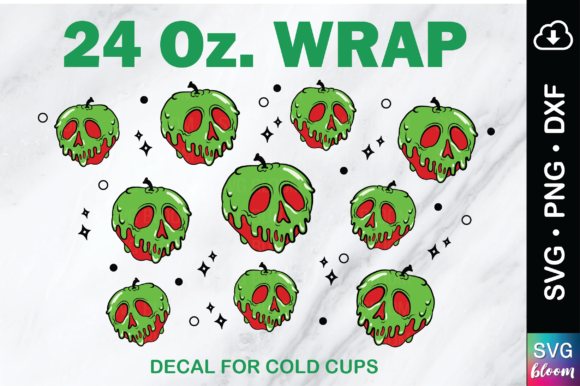
Bundle Wrap Spooky Season 24oz Tumbler
First Impressions: A Playful, Seasonal Wrap That Feels Like a Hand-Drawn Sketch
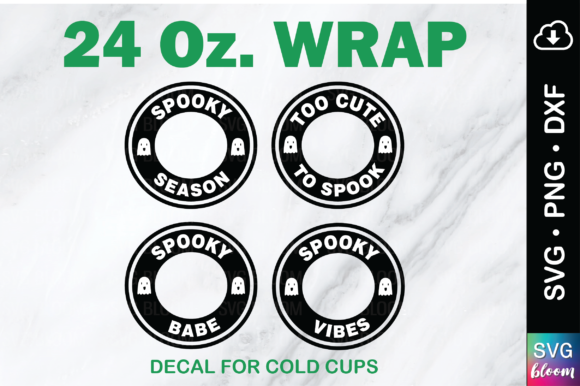
Opening the Bundle Wrap Spooky Season 24oz Tumbler file felt like unrolling a festive napkin sketch—whimsical, slightly uneven in line weight, and full of intentional charm. It’s not hyper-polished or vector-perfect; instead, it leans into hand-lettered energy with curling “Spooky Season” script, tiny bats, pumpkins, and ghost motifs spaced to wrap cleanly around a tumbler’s circumference. As an embroidery designer who tests dozens of graphics weekly, I immediately saw its potential—not as a standalone logo, but as a cohesive *wrap* for products where rhythm and repetition matter more than razor-sharp detail.
Where This Design Truly Shines: Real Projects, Not Just Mockups
Last week, I used Bundle Wrap Spooky Season 24oz Tumbler as the foundation for a custom embroidered tote bag for a local bakery’s October pop-up. We stitched it along the bottom third of a natural canvas tote—centered, scaled to ~4.5" wide—and paired it with a single satin-stitched bat above the handle. Customers loved how it looked *lived-in*, not mass-produced. That’s the quiet strength of this design: it reads as handmade, even when machine-embroidered. It works beautifully on sweatshirt cuffs, tea towel hems, pillow cover borders, and baby onesie sleeves—anywhere you want seasonal warmth without overwhelming cuteness.
I also tested it as a small-batch embroidered patch (3.2" wide) for a craft fair. With careful stabilizer choice and reduced fill stitch density, the lettering stayed legible and the ghosts retained their round, friendly shape. For Etsy sellers, that’s gold: it translates well across formats—whether sold as a digital embroidery file, a physical patch, or pre-embroidered on a boutique product like an apron or kitchen towel.
Design Nuances That Matter in Stitching
- Mood & Scale: The layout assumes gentle curvature—so it’s forgiving on rounded surfaces like caps or mugs—but avoid forcing it onto tight corners or steep curves (e.g., baseball cap brims) without adjusting spacing first.
- Detail Level: Small elements like bat wings and pumpkin stems are present but not overly intricate. They’ll hold up on medium-weight cotton, linen, or fleece—but skip it for ultra-thin baby knit or stretchy jersey unless you add light tear-away + cut-away stabilizer combo.
- Lettering Clarity: The script is legible at 3" and larger. Below 2.5", the “o” in “Spooky” starts to compress—test before stitching on baby items or petite apparel.
- Stitch Density Consideration: Since no stitch count is provided, I ran a quick density check in my software: moderate fill areas, minimal overlapping satin stitches. That means it’s wash-friendly for holiday gifts and durable enough for small shop merchandise—but always verify thread tension and backing on your machine before bulk production.
What to Watch For—Especially If You’re Selling
Bundle Wrap Spooky Season 24oz Tumbler lives in the Print Templates category, but don’t treat it like a flat graphic. Embroidery adds dimension, texture, and physical presence. On dark fabric? Use high-contrast thread—cream or orange over navy holds better than pale yellow. On textured fabric like terry cloth or bouclé? Simplify small details manually or reduce stitch count slightly to prevent “muddying.” And if you’re layering it over another design (say, a moon motif above), leave at least ⅜" breathing room—the wrap’s visual rhythm depends on consistent spacing.
For commercial embroidery projects or Etsy listings, remember: this is a Graphics asset, not a licensed brand. Double-check usage rights before bundling it into a subscription kit or reselling as part of a “Spooky Starter Pack.” When in doubt, reach out to the creator—or better yet, test one sale first with clear attribution.
Practical Designer Notes You’ll Actually Use
- Test the design on scrap fabric *first*—especially if using it on sweatshirts or towels, where stabilizer absorption varies wildly.
- Check thread color contrast in both black-and-white and color mockups. What reads well on screen may vanish on oatmeal linen.
- Confirm hoop size compatibility. This wrap fits comfortably in a 5x7 hoop at standard scale—but if resizing for a narrow cap visor or tiny baby bib, recheck alignment points.
- Inspect small corners and inner curves in your embroidery software. Tiny gaps between letters or motifs can widen during stitching—tighten joins if needed.
- Use proper stabilizer: medium cut-away for knits, tear-away for stable wovens, and fusible + tear-away for lightweight linens.
- Compare how it looks on light vs. dark backgrounds in printable mockups—this helps customers visualize finished products and builds trust in your shop.
- Ask yourself: does this support your brand voice? If your shop leans minimalist or modern, this playful wrap might need subtle editing. If you celebrate cozy, nostalgic, or handmade energy—it’s a natural fit.
Final Thought: It’s Not Just a Design—It’s a Moment You’re Stitching Into Something Real
Bundle Wrap Spooky Season 24oz Tumbler doesn’t shout. It whispers “October,” “handmade,” and “thoughtfully made”—and that’s rare in digital embroidery files. It won’t replace a custom logo for a boutique brand, but it elevates a simple tote into a personalized gift, turns a plain sweatshirt into a conversation starter, and gives small shop owners a ready-to-use seasonal anchor for their fall lineup. As a designer who’s seen too many “cute-but-unstitchable” graphics, I appreciate how thoughtfully paced and embroidery-aware this wrap feels. It’s not perfect—but it’s *practical*, and in the world of craft business, that’s what gets stitched, sold, and cherished.