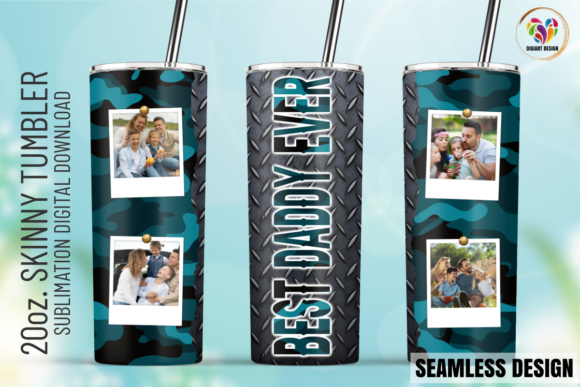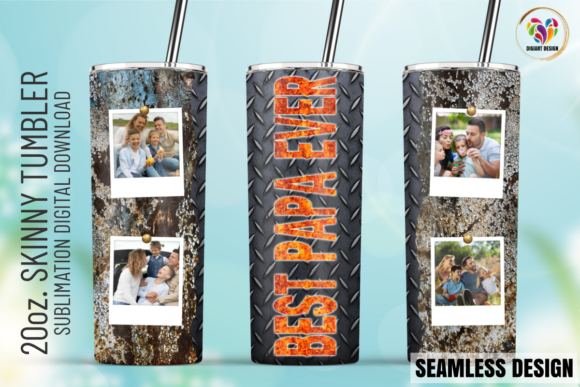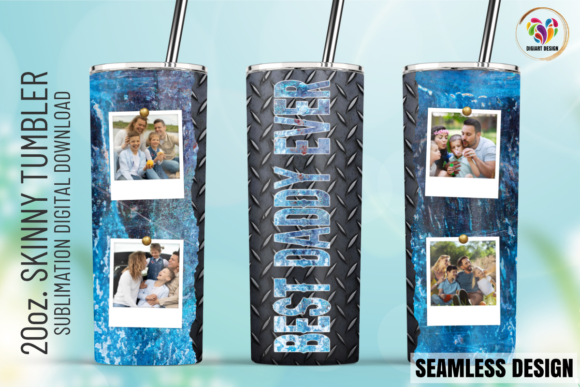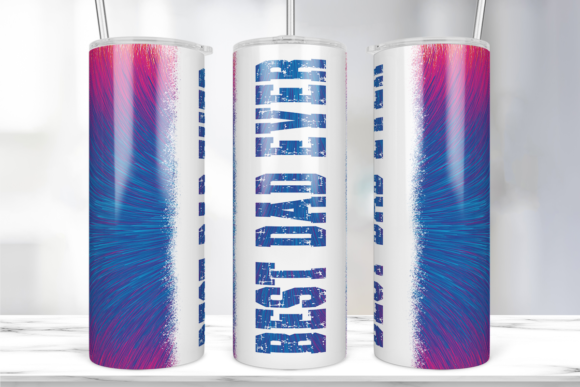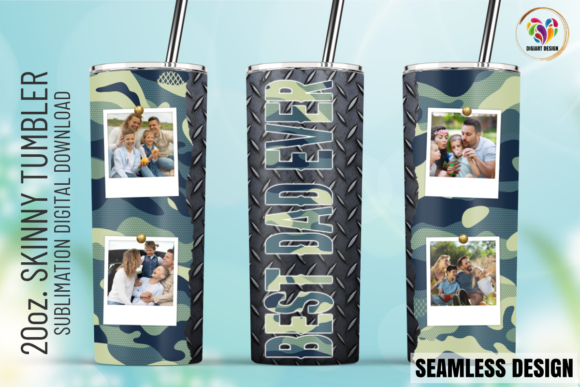
Best Dad Ever Camo Tumbler Wrap
Last week I sat down with a fresh stack of sublimation blanks and a list of Father's Day orders from my Etsy shop. Six customers wanted something rugged, personal, and completely unlike the generic ties-and-socks routine. One of them sent a message that basically summed up the whole challenge: "Make it look like him, not like a store." That's when I pulled up the Best Dad Ever Camo Tumbler Wrap and started thinking through how this design would actually perform on a finished tumbler, not just how it looks on a screen.
I have been designing and reviewing embroidery products long enough to know that a digital file can look flawless in a preview and still fall apart the moment thread hits fabric. So when I evaluate something like this camo wrap, I ask practical questions. How does it read from three feet away? Does the lettering hold up after stitching? Will a customer feel proud handing this over as a handmade gift? Those are the standards that matter when you run a small craft business or sell personalized products at weekend markets.
What the Camo Wrap Communicates Before a Single Stitch
Opening the file, the first thing that struck me was the balance between bold outdoor texture and warm sentiment. The camouflage pattern gives it an immediate rugged, masculine feel without tipping into overly aggressive military styling. The "Best Dad Ever" lettering sits prominently, and the layout feels intentional rather than slapped together. For a machine embroidery design intended to wrap around a curved tumbler surface, that matters more than most people realize.
Too many tumbler wraps cram detail into corners that disappear once the substrate curves. This one keeps the focal point centered and readable. The camo elements frame the text rather than competing with it, which means the message stays clear even when the finished product is sitting on a desk or cupholder. From a reviewer's perspective, that kind of visual hierarchy separates a usable embroidery file from a pretty graphic that only works on flat screens.
Where This Design Belongs in Real Embroidery Projects
I mentally ran through my usual product lineup while studying the wrap. It would translate beautifully onto a stainless steel tumbler, obviously, but I also started picturing it on coordinating items. A matching camo tote bag design with the same lettering style. A sweatshirt embroidery placement on the left chest or across the back. Even a simplified version adapted as an embroidered patch for a dad-themed cap or jacket.
The camo pattern gives it a versatility that pure typography designs lack. You can pitch this to customers looking for hunting season gifts, outdoor enthusiast presents, military family appreciation items, or simply a Father's Day gift that feels more thoughtful than a standard mug. When I think about custom apparel applications, I see this working on heavy cotton canvas aprons for the grill-master dad, on structured caps for the weekend fisherman, and on sturdy tote bag panels for the dad who carries gear everywhere.
For Etsy seller purposes, the design also lends itself to product photography that tells a story. Tumble the finished tumbler next to a flannel shirt, a pair of work gloves, or some pine branches, and you instantly create a lifestyle image that resonates with buyers browsing for personalized gift options. The camo provides a built-in aesthetic that simplifies your styling decisions.
How the Camo Pattern Behaves Under Stitch Conditions
Now let's talk about what happens when thread meets fabric. Camouflage patterns rely on organic, irregular shapes, and that is both a strength and a potential headache in embroidery. The irregularity means slight misregistrations are more forgiving than they would be on geometric patterns. If a fill stitch section shifts by half a millimeter, the camo absorbs it. On a striped or plaid design, that same shift would be glaringly obvious.
However, the density of the camo sections deserves attention. Areas with multiple overlapping organic shapes can create thick stitch density that puckers lightweight fabrics. I would strongly recommend testing this on your intended substrate before running a batch. On a tumbler wrap application, the rigid surface handles density well. On a thin cotton t-shirt or a baby embroidery onesie, you might need to adjust the underlay or reduce density in the camo sections to keep the fabric from buckling.
The lettering likely uses a satin stitch or a clean fill, and the contrast between the text and the camo background determines readability. On light-colored substrates, the camo pattern will read clearly and the text will pop if you choose thread colors with enough contrast. On dark fabric, especially dark green or charcoal, the camo elements can blend into the background and lose definition. Testing on both light and dark fabric texture swatches before committing to a full run is non-negotiable advice I give to every craft business owner.
Pairing the Wrap with the Right Products and Surfaces
I spent a solid hour thinking through which products would make this design shine and which ones would fight against it. The tumbler is the obvious choice, and for good reason. The smooth, rigid surface handles the full wrap beautifully, and the curved shape of a tumbler puts the camo pattern in motion as you rotate it. That dynamic quality makes the finished product feel more premium than a static flat print.
Beyond tumblers, I would confidently place this on a heavyweight canvas apron, a structured dad cap with a curved brim, a zippered cooler bag, or a sturdy pillow cover for a cabin or man-cave setup. The design also works on kitchen towel sets if you isolate the lettering element and use the camo as an accent strip rather than an all-over pattern. For holiday embroidery gift sets, pairing a camo tumbler with a matching embroidered towel and a simple patch creates a cohesive product line that photographs well and sells as a bundle.
Where I would exercise caution is on highly textured fabrics like terry cloth, loosely woven linen, or slub cotton. The camo details need a reasonably smooth surface to read clearly. On a waffle-weave tea towel, the pattern would fracture across the texture and lose its impact. Similarly, stretchy performance fabrics can distort the organic camo shapes during hooping and stitching, creating wavy edges that undermine the professional look of the handmade product.
What Small Business Owners Need to Know Before Selling
If you are planning to list finished products using this wrap on Etsy or sell them at craft fairs, the design has strong commercial appeal. Father's Day is the peak season, but don't overlook year-round opportunities. Birthdays, retirement celebrations, deployment homecomings, and even Christmas gifts for outdoorsy dads all create demand for camo-themed dad merchandise. The commercial embroidery potential extends beyond tumblers into coordinated gift sets that increase your average order value.
One practical note from experience: customers shopping for dad gifts often buy impulsively on emotion and then scrutinize the product upon arrival. The lettering needs to be crisp, the camo pattern needs to be recognizable, and the overall presentation needs to feel substantial. A poorly hooped design with uneven stitching or visible underlay will generate returns and negative reviews. A well-executed embroidery project using this wrap, on the other hand, tends to earn repeat buyers who come back for grandpa versions, uncle versions, and coordinating items for the whole family.
When creating printable mockup images for your listings, show the design on multiple products and in realistic settings. A flat digital preview alone does not convey how the camo wraps around a three-dimensional object. Lifestyle photos or well-staged mockups help buyers visualize the product in their own lives, which directly impacts conversion rates for small shop product listings.
Technical Checks Every Embroiderer Should Run
Before you stitch this on a customer order, do yourself a favor and run through a proper test sequence. I keep a checklist for every new digital embroidery file I bring into my workflow, and here is what I would prioritize for this camo wrap:
- Thread color selection. Test the camo sections with multiple green, brown, and tan thread combinations. The colors that look balanced on screen may feel muddy or washed out in thread, especially under warm indoor lighting.
- Stabilizer choice. On a tumbler, you are working with a rigid substrate, so stabilizer needs differ from fabric applications. On soft goods, use a medium-weight cutaway stabilizer for knits and a tear-away for woven fabrics to prevent distortion.
- Hoop size confirmation. Measure the design dimensions against your available hoops before committing. The wrap format may require a larger hoop than standard lettering designs, and discovering that mid-project is a headache you can avoid.
- Small detail inspection. Zoom in on the camo pattern edges and the lettering intersections. Look for tiny running stitch segments that might not render well at high speed or on textured surfaces.
- Black and white mockup test. Convert the design to grayscale temporarily to check whether the value contrast between the text and the camo background holds up without color cues. Strong value contrast means the design reads clearly even from a distance or in dim lighting.
- Wash and wear test. Stitch a sample on a fabric scrap, wash it twice, and check for thread breaks, fading, or distortion. A personalized gift that deteriorates after three washes damages your reputation.
Licensing, File Types, and the Digital Product Reality
Since this is a digital embroidery file sold as an instant download with no physical product shipped, the responsibility falls on you to verify the file formats included, the hoop size compatibility, and the license terms before using it on items you intend to sell. The listing is categorized under Print Templates and Graphics, which suggests the file is intended for print or sublimation use on tumbler wraps rather than direct embroidery machine formats. That distinction matters enormously depending on your production method.
If you are a sublimation printer, you likely need a high-resolution PNG or JPEG with the correct dimensions for your tumbler press. If you are an embroiderer hoping to stitch this design, you will need to confirm whether the file includes embroidery-specific formats like PES, DST, or EXP, or whether you need to digitize the artwork yourself. I have seen too many crafters purchase a beautiful graphic only to realize it is not in a stitch-ready format. Check the file details before you buy, and if the listing does not specify embroidery formats, reach out to the seller for clarification.
For design assets used in a craft business, licensing transparency protects you. Confirm whether the commercial use terms allow you to sell finished products, how many units you can produce, and whether any attribution or restrictions apply. Most tumbler wrap sellers permit commercial use on physical products, but do not assume. A quick license check at the start saves you from complications down the road.
The Final Verdict from a Working Designer's Perspective
After evaluating the Best Dad Ever Camo Tumbler Wrap from every angle that matters to a working embroiderer and product seller, I see a design with genuine practical value. It is not trying to be everything to everyone, and that focus is its strength. The camo pattern gives it personality, the lettering centers the message, and the layout respects the realities of curved surfaces and stitch behavior.
For the dad gift market, this design hits a sweet spot between rugged and heartfelt. It appeals to the customer who wants something masculine and outdoorsy without losing the sentimental core of a best dad ever message. When executed well on a quality tumbler or a coordinated set of products, it creates the kind of handmade product that customers photograph and share, which is the best organic marketing a small shop can get.
My recommendation is to treat this as a versatile foundation piece in your product lineup. Test it thoroughly, pair it with quality substrates, and present it with photography that tells a dad-specific story. The design does the heavy lifting on visual appeal. Your job is to make sure the stitching, the substrate, and the presentation all match the standard the design sets.